

Standard auto policies aren't built for a car like this
A McLaren isn't valued, driven, or repaired like a typical vehicle — and a typical policy prices it that way. Actual cash value coverage depreciates a 750S the same way it depreciates a sedan, and standard carriers routinely balk at genuine McLaren parts, factory-trained labor rates, and track-day exclusions.
We write agreed-value policies that lock in the car's worth at the time of binding — so a total loss doesn't turn into a negotiation. Coverage is built around how McLarens are actually used in Colorado: seasonal storage, track days, low-mileage collector use, and daily-driven Arturas alike.
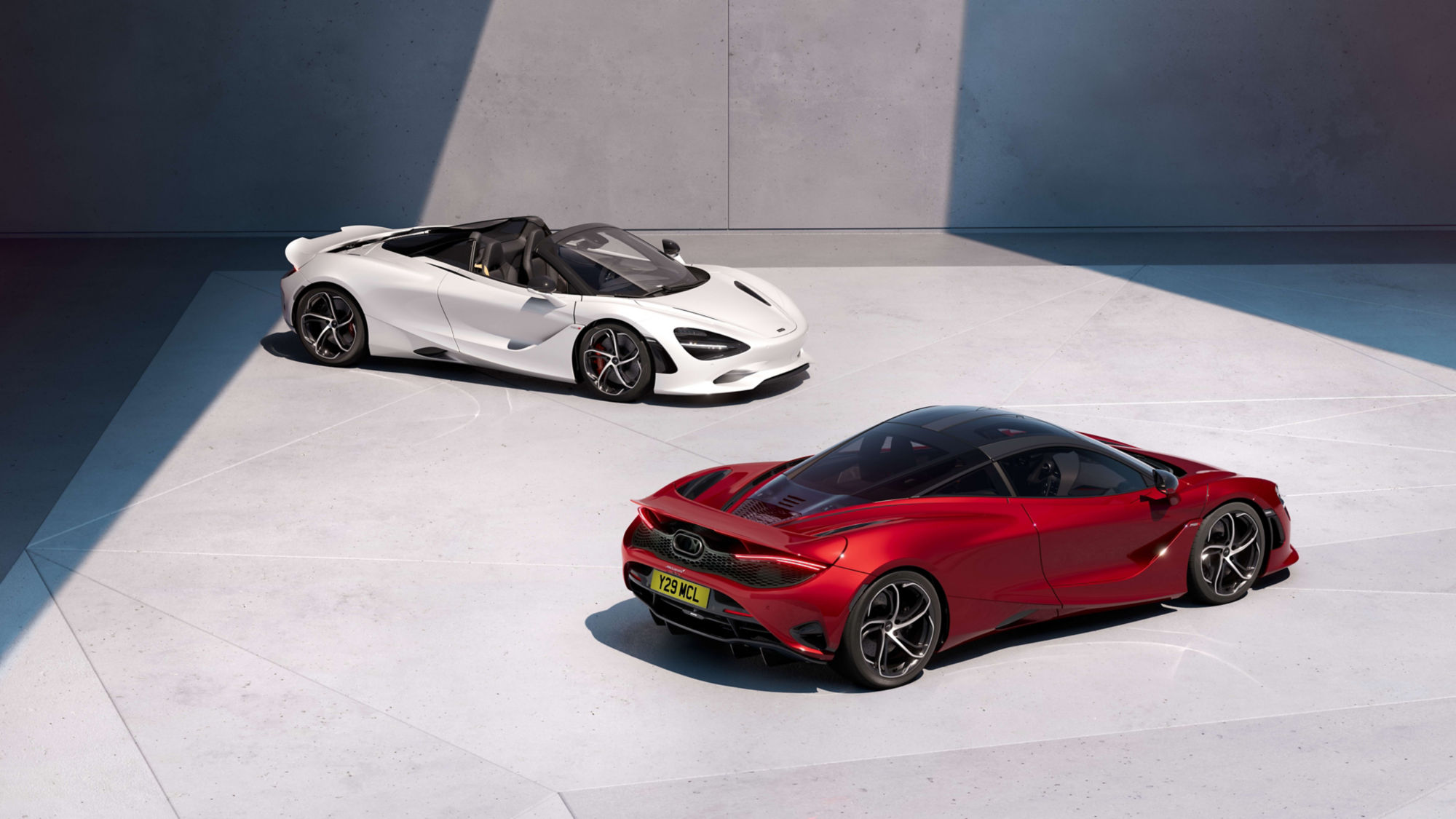
Built around the McLaren lineup
Every McLaren has a different risk and repair profile — a track-focused 750S Spider isn't underwritten the same way as a daily Artura. Here's how coverage typically differs across the current range.
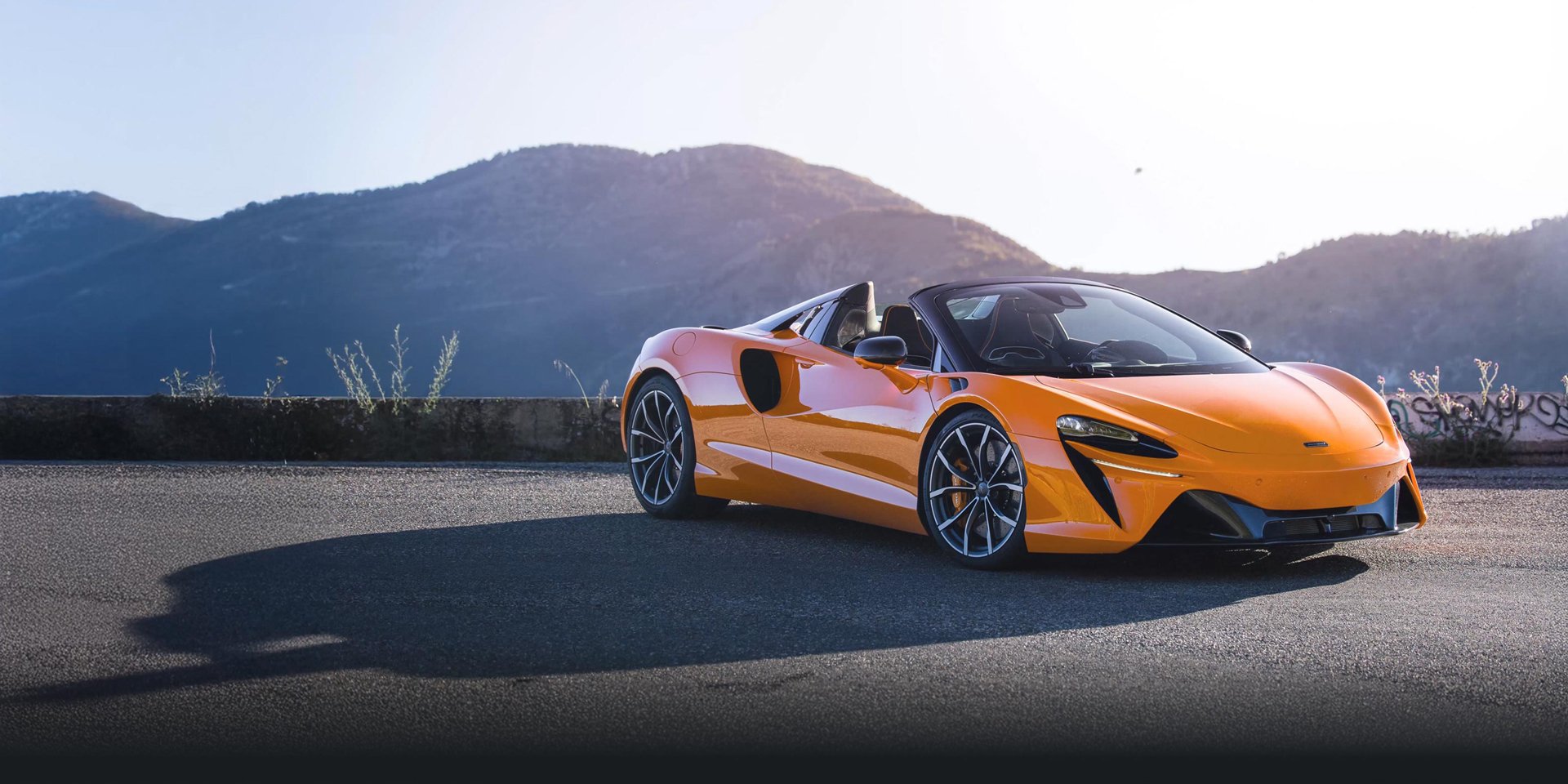
Artura & Artura Spider
McLaren's plug-in hybrid supercar sees more daily-driver use than any current model — coverage accounts for higher annual mileage and home charging exposure.
750S & 750S Spider
The flagship series supercar. Agreed value keeps pace with a market where well-optioned cars regularly appreciate above MSRP.

GTS
Built for grand touring, which in Colorado means mountain-pass mileage and long road trips — coverage flexes for actual usage, not a garage-queen assumption.
.jpg)
P1
A modern hypercar with genuine collector status. Agreed value is set to reflect current market appreciation, not a depreciation schedule built for ordinary cars.
Photo via Wikimedia Commons (CC BY-SA)

Speedtail
McLaren's limited-production Hyper-GT — three-seat, 250 mph, and produced in extremely limited numbers. Coverage is built individually around cars like this one.
Photo via Wikimedia Commons (CC BY-SA)

F1
The car that started it all. Only 106 were ever built, and it's now one of the most valuable cars in the world — coverage for an F1 is built around appraisal, not a standard valuation table.
Photo via Wikimedia Commons (CC BY-SA)
Don't see your model listed? Ask us — we cover the full McLaren range, including retired models like the 570S, 600LT, and 675LT.
What published insurance data actually shows
The Highway Loss Data Institute (HLDI) — a nonprofit affiliated with the Insurance Institute for Highway Safety — publishes real collision loss statistics by vehicle series where enough insured exposure exists. The 720S convertible is the one McLaren model that clears that bar in the most recent published data. Results are indexed to 100, representing the average result across all passenger vehicles.
| Vehicle | Relative claim frequency | Relative claim severity | Relative overall losses |
|---|---|---|---|
| All passenger vehicles (baseline) | 100 | 100 | 100 |
| McLaren 720S convertible (2020–22) | 65 | 1,159 | 752 |
Source: Highway Loss Data Institute, Insurance Report R-23: Collision Losses, 2020–22 Model Years (April 2023), published by the Insurance Institute for Highway Safety. The 720S convertible's relative claim severity of 1,159 — over 11x the passenger-vehicle average — is one of the highest figures we cite anywhere on this site; when a claim happens, repair costs on a carbon-tub supercar are simply not comparable to an ordinary vehicle. The Artura, 750S, GTS, P1, Speedtail, and F1 don't have published HLDI figures: some are too new or too low-volume to clear HLDI's reporting threshold (1,000+ insured vehicle years or 100+ claims), and legacy models like the P1, Speedtail, and F1 were never produced in numbers that would generate this kind of data. We'd rather say plainly that the data doesn't exist for those models than cite a number that isn't real — and the 720S figure above tells you most of what you need to know regardless.
What carriers actually ask before they'll write coverage
For the P1, Speedtail, and F1 especially — genuinely limited-production, multi-million-dollar cars — specialty carriers underwrite the driver as much as the car: prior insurance history on other high-value or high-performance vehicles, a clean driving record, secure storage, and a realistic account of how the car will actually be used. The Artura, 750S, and GTS often fit a strong high-value auto policy, with underwriting closer to a standard exotic-car process given their higher production volumes.
Some owners showcase their McLaren. Others keep it entirely private. Both are covered correctly.
Some owners want their McLaren seen — at Cars & Coffee, track days, concours judging for the P1 and F1 especially. Others prefer the opposite: no public record, no plates or VINs in photos, a car that stays out of sight entirely in private, climate-controlled storage. Both are legitimate ownership styles, and both change what the policy needs to account for, particularly for a 106-unit F1. A car that's regularly showcased or tracked carries different transit, event, and liability exposure than one kept entirely private. Either way, coverage is built around the real risks these cars actually face — vandalism, wind and hail, theft, and even theft-for-ransom scenarios on the rarest models that specialty carriers are equipped to underwrite around, not just collision damage.
Photo via Wikimedia Commons (CC BY-SA)
A daily-driven hybrid and a 106-unit hypercar need very different policies
The Artura is McLaren's most daily-driven model by a wide margin — a plug-in hybrid supercar that owners genuinely commute in, which means coverage needs to account for higher annual mileage and home charging exposure rather than assume garage-queen use. The 720S convertible's real claims data backs this up in a different way: low claim frequency (65) but severity that's over 11x the passenger-vehicle average, consistent with a car that's driven carefully but extraordinarily expensive to repair when something does go wrong. At the other end, the P1, Speedtail, and F1 are collector-grade from the day they left the factory — appraisal-based agreed value, not a market average, is the only way to price them correctly. We ask the right questions upfront so your policy actually matches your specific car and how you use it.
An independent brokerage, not a single carrier
We're not captive to one insurance company, and we're not a dealership finance office. That independence is the point: our only job is finding you the right coverage at the right price, then advocating for you if you ever need to use it.
Access to multiple carriers
We shop coverage across a range of specialty and standard carriers instead of pricing everything through one company's rate table, so you see real options instead of a single take-it-or-leave-it quote.
Bundle for a better rate
Combine your McLaren with your home, everyday autos, umbrella liability, other collector vehicles, and — where it applies — your business insurance. Carriers price account relationships, and that often means meaningfully better terms across the board.
Four things a standard policy misses
Agreed value where it fits, high-value auto where it doesn't
A P1, Speedtail, or F1 needs agreed value set at binding, ideally against individual documentation. An Artura or 750S often fits a strong high-value auto policy. The right type depends on the specific car.
Genuine McLaren parts & specialist labor
Coverage that pays for genuine parts and technicians who understand carbon-tub construction and McLaren-specific drivetrains, not aftermarket substitutes or a generic dealer estimate.
Appraisal-based valuation for limited-production cars
A 106-unit F1 or ultra-low-volume Speedtail has no meaningful comparable-sales average. Coverage needs a real, documented appraisal built around that specific car.
Claim severity that outpaces the badge
The 720S convertible's published claim severity runs over 11x the passenger-vehicle baseline — coverage needs to reflect real carbon-fiber and McLaren-specific repair costs, not a generic sports-car estimate.
Get your McLaren covered correctly
Tell us about your car — model, year, how you use it, and anything else worth knowing — and we'll put together coverage shopped across multiple carriers.